Showing posts with label Bee-Collected Pollen. Show all posts

Tuesday, June 03, 2025

Air from Beehives Used to Treat Allergies, Migraines in Turkey

The new health trend sweeping Europe? Breathing in air from Turkish beehives


In an idyllic valley near the Aegean Sea, beekeeper Huseyin Ceylan invites people to inhale air directly from beehives.

Ceylan's farm, located in Karaburun, in Turkey's Aegean coastal province of Izmir, attracts visitors seeking relief from various ailments with traditional "apitherapy," a term derived from the Greek for bees.

Guests often stay for several days, residing in cabins surrounded by lush greenery, inhaling air from the beehives for up to three hours daily.

Ceylan claims this therapy aids in alleviating conditions ranging from allergies to migraines.

Saturday, May 17, 2025

World Bee Day - May 20, 2025


On this occasion of World Bee Day, celebrated annually on May 20th, we, the Asian Apicultural Association (AAA), urge all member countries to unite in global efforts to protect pollinators, safeguard food security, preserve biodiversity, and enhance human health. This day serves as a global reminder of the indispensable role bees and other pollinators play in sustaining life on Earth, and it calls upon us to redouble our efforts in safeguarding their future.

Bees are the unsung heroes of our ecosystems and economies. They pollinate over 75% of the world’s leading food crops and 90% of wild plants, ensuring biodiversity, food security, and livelihoods for millions. In Asia, a region rich in agricultural diversity, the contributions of bees are even more pronounced—from the rice paddies of Southeast Asia to the apple orchards of the Himalayas, their labor underpins our food systems and cultural heritage.

Yet, bees today face unprecedented threats. Climate change, habitat loss, pesticide exposure, and disease outbreaks are pushing pollinator populations to the brink. In Asia, rapid urbanization, deforestation, and unsustainable agricultural practices exacerbate these challenges. As stewards of this vital resource, the Asian Apicultural Association stands committed to fostering collaboration, innovation, and awareness to reverse these trends.

This year’s World Bee Day theme, let's following the United Nations & FAO “Bee inspired by nature to nourish us all” to take decisive action.

We call on AAA member countries to:Organize Public Events: Host workshops, school programs, and community activities to raise awareness about bees’ critical role.

Advancing Research & Education: Supporting studies on pollinator health and sharing best practices across borders.
Promoting Sustainable Beekeeping: Empowering beekeepers with tools to adapt to climate shifts and market demands.
Advocating for Policy Change: Engaging governments to prioritize pollinator-friendly agriculture and reduce harmful pesticide use.
Raising Public Awareness: Inspiring communities, especially youth, to become champions for bees through education and outreach.
Celebrate Local Beekeepers: Highlight their contributions to food systems and economic resilience.
......
Let us lead by example:Plant wildflowers, create green corridors, and reduce plastic waste.
Collaborate across borders to share knowledge and resources.

Engage youth to inspire future stewards of pollinators.

Together, we can turn awareness into action. By protecting bees, we protect our food, our health, and our planet.

Join us, join UN & FAO in making World Bee Day 2025 a catalyst for change!
For resources, partnerships, or support, contact the AAA Secretariat at AAA office.

Act now—for the bees, for Asia, for the world.

Key Themes Highlighted:Urgency of pollinator protection in Asia.

Link to food security, biodiversity, and health.
Tangible actions for member countries.
Collaboration and youth engagement.

Let’s bee the change! ๐ŸŒ๐Ÿ

Customization Tips:Add country-specific examples (e.g., "In [Country], bees pollinate [local crop]...").
Include AAA logos or links to campaign materials.

Adjust deadlines or event formats to suit regional contexts.

To our beekeepers, researchers, and enthusiasts: thank you for your tireless dedication. Your work is not just a vocation—it is a legacy for future generations.

Let us use this World Bee Day to reaffirm our commitment. Together, we can ensure that bees thrive, ecosystems flourish, and communities prosper. The time to act is now.

We’d love to hear from you ๐ŸŒ๐ŸLet us know how you plan to celebrate World Bee Day in your country. ๐ŸŒ๐Ÿ

Please don't forget to check the attachment: Speech from President Prof. Siriwat on WBD.
Happy World Bee Day! ๐ŸŒ๐Ÿ

Warm regards,

Lihong
Secretary-General
Asian Apicultural Associaton (AAA)

Sunday, July 23, 2023

UK Launches First Apitherapy Center


The UK’s first ‘bee therapy’ retreat just launched in Perthshire, with sounds, vibrations and aromas to help visitors de-stress and chill out. I was buzzing to check it out. Here’s how I got on.

The Courier.

Wednesday, May 17, 2023

Beebread, Bee-Collected Pollen and Artificially Fermented Pollen Show Significant Antiviral Activity Against Influenza A Virus


Antiviral Activity of Beebread, Bee-Collected Pollen and Artificially Fermented Pollen against Influenza A Virus

Foods 2023, 12(10), 1978

Bee-collected pollen (BCP) and the naturally fermented BCP product known as bee bread (BB) are functional foods renowned for their nutritious, antioxidant, antibacterial and other therapeutic properties. This is the first study employed to assess the antiviral activity of BCP and BB against influenza A virus (IAV) H1N1 along with their proteinaceous, aqueous and n-butanol fractions. Additionally, artificially fermented BCP has been evaluated against IAV (H1N1). Antiviral activity was assessed in vitro by comparative real-time PCR assay. IC50 values ranged from 0.022 to 10.04 mg/mL, and Selectivity Index (SI) values ranged from 1.06 to 338.64. Artificially fermented BCP samples AF5 and AF17 demonstrated higher SI values than unfermented BCP, and proteinaceous fractions demonstrated the highest SI values. The chemical profile of BCP and BB samples, analyzed using NMR and LC-MS, revealed the presence of specialized metabolites that may contribute toward the antiviral activity. 

Overall, the significant anti-IAV activity of BB and BCP harvested in Thessaly (Greece) could be attributed to chemical composition (especially undiscovered yet proteinaceous compounds) and possibly to microbiome metabolism. Further research regarding the antiviral properties of BCP and BB will elucidate the mode of action and could lead to new treatments against IAV or other viral diseases.

Saturday, February 04, 2023

Turkish First Lady Emine Erdogan Awarded for Promoting Apitherapy, Using Bee Products for Medicinal PurposeS


Turkish first lady Emine Erdogan on Friday received the Dr. Beck Apitherapy Award for promoting bee products for medicinal purposes.

She hosted the International Apitherapy Federation's executives at the Vahdettin Mansion in Istanbul.

At the reception, Janos Kormendy-Racz, head of the Hungarian Apitherapy Association, presented the award to Erdogan for her contributions to the dissemination of apitherapy studies in Tรผrkiye.

“This award is half Turkish, half Hungarian. The person you see in the picture has made great contributions to the use of bee products in the field of medicine and to the development of bee studies. I hope that it will be an occasion for us to go further in Turkey as well,” Kormendy-Racz said...

Tuesday, January 10, 2023

New Video: 'Bee Air" Therapy in Moldova


Meet Mariana and Iurie, beekeepers from Moldova. Inspired by farmers from Ukraine, they decided to bring the innovative practice of apitherapy to Moldova. With big aspirations but little knowledge of business, they needed help with capacity-building to become successful entrepreneurs

As part of a programme to help aspiring Moldovan enterprises, PIN Moldova, in partnership with the local Socio-Economic Policy Centre, “CONSENS”, has worked with business owners like Mariana and Iurie.

WATCH THE VIDEO.

Tuesday, October 18, 2022

Friday, July 29, 2022

Bee Pollen May Be Useful as Protective Strategy for Autism Spectrum Disorders (ASD)

Protective Effects of Bee Pollen on Multiple Propionic Acid-Induced Biochemical Autistic Features in a Rat Model

Metabolites 2022, 12(7), 571; https://doi.org/10.3390/metabo12070571

Autism spectrum disorders (ASDs) are neurodevelopmental disorders that clinically presented as impaired social interaction, repetitive behaviors, and weakened communication. The use of bee pollen as a supplement rich in amino acids amino acids, vitamins, lipids, and countless bioactive substances may lead to the relief of oxidative stress, neuroinflammation, glutamate excitotoxicity, and impaired neurochemistry as etiological mechanisms autism. Thirty young male Western albino rats were randomly divided as: Group I-control; Group II, in which autism was induced by the oral administration of 250 mg propionic acid/kg body weight/day for three days followed by orally administered saline until the end of experiment and Group III, the bee pollen-treated group, in which the rats were treated with 250 mg/kg body weight of bee pollen for four weeks before autism was induced as described for Group II. Markers related to oxidative stress, apoptosis, inflammation, glutamate excitotoxicity, and neurochemistry were measured in the brain tissue. Our results indicated that while glutathione serotonin, dopamine, gamma-aminobutyric acid (GABA), GABA/Glutamate ratio, and vitamin C were significantly reduced in propionic acid-treated group (p < 0.05), glutamate, IFN-ฮณ, IL-1A, IL-6, caspase-3, and lipid peroxide levels were significantly elevated (p < 0.05). Bee pollen supplementation demonstrates protective potency presented as amelioration of most of the measured variables with significance range between (p < 0.05)–(p < 0.001)

Friday, May 20, 2022

Bee Bread is Probiotic, Has Multiple Health Benefits

Biotechnological Processes Simulating the Natural Fermentation Process of Bee Bread and Therapeutic Properties-An Overview

Front Nutr. 2022 Apr 27

Recent signs of progress in functional foods and nutraceuticals highlighted the favorable impact of bioactive molecules on human health and longevity. As an outcome of the fermentation process, an increasing interest is developed in bee products.

Bee bread (BB) is a different product intended for humans and bees, resulting from bee pollen's lactic fermentation in the honeycombs, abundant in polyphenols, nutrients (vitamins and proteins), fatty acids, and minerals. BB conservation is correlated to bacteria metabolites, mainly created by Pseudomonas spp., Lactobacillus spp., and Saccharomyces spp., which give lactic acid bacteria the ability to outperform other microbial groups. Because of enzymatic transformations, the fermentation process increases the content of new compounds. After the fermentation process is finalized, the meaningful content of lactic acid and several metabolites prevent the damage caused by various pathogens that could influence the quality of BB.

Over the last few years, there has been an increase in bee pollen fermentation processes to unconventional dietary and functional supplements. The use of the chosen starters improves the bioavailability and digestibility of bioactive substances naturally found in bee pollen. As a consequence of enzymatic changes, the fermentation process enhances BB components and preserves them against loss of characteristics.

In this aspect, the present review describes the current biotechnological advancements in the development of BB rich in beneficial components derived from bee pollen fermentation and its use as a food supplement and probiotic product with increased shelf life and multiple health benefits.

Thursday, March 24, 2022

Everything to Know About Apitherapy


Medical News Today

Apitherapy is an alternative therapy that uses products made by honeybees for medicinal purposes. These products include honey, beeswax, royal jelly, pollen, propolis, and bee venom. Apitherapists may use a combination of these products, depending on the condition they are treating...

Monday, March 07, 2022

Upcoming Apitherapy Events Worldwide


Beehive Air Therapy Conference, in Spanish

March 19-20

For more details write an email to: DrStangaciu@Gmail.com

***

Beehive Air Therapy Conference, in Romanian

April 2-3

For more details write an email to: DrStangaciu@Gmail.com

***

Intensive Apitherapy Courses in Iran

April 9-13 and April 16-21
For more details write an email to: DrStangaciu@Gmail.com

***

German Apitherapy Workshops

April 24-30

***

International Conference on Propolis

May 5-7
***

First International Conference on Api-Microbiology

May 28-29

For more details write an email to: DrStangaciu@Gmail.com
***

First Api-Pediatry Conference in Arabic

June 29-30

For more details write an email to: DrStangaciu@Gmail.com and Prof. Mamdouh Abdelrhman mamdouh.abdelrhman@gmail.com

Friday, January 14, 2022

Research: Bee Pollen is a Source of Antioxidants and Antimicrobials


Screening of Plant Pollen Sources, Polyphenolic Compounds, Fatty Acids and Antioxidant/Antimicrobial Activity from Bee Pollen

Molecules 2022, 27(1), 117

In this study, the botanical origin, total flavonoid and phenolic content, antioxidant activity, phenolic profile and fatty acid composition of mixed bee pollen loads collected in Bayburt, Turkey, were determined.

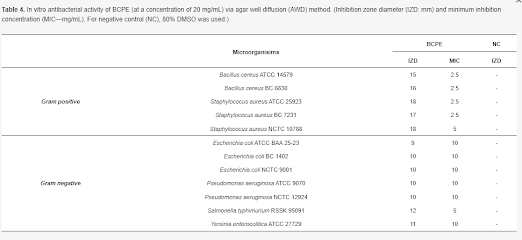
In addition to these assays, antibacterial activity of bee-collected pollen extract (BCPE) against a variety of food-borne pathogenic bacteria was determined in vitro. Pollen loads were classified into five botanical families based on their color: Asteraceae, Fabaceae, Campanulaceae, Cistaceae and Rosaceae.

Total flavonoid, total phenolic, CUPRAC and CERAC concentrations were 173.52 mg GAE/g, 79.21 mg QE/g, 85.59 mg Trolox/g and 118.13 mg Trolox/g, respectively. Twenty-three phenolic compounds were scanned in bee pollen extract by LC-MS/MS, with rutin being the most abundant. Cis-4,7,10,13,16,19 docosahexaenoic acid was the predominant fatty acid, followed by cis-11-eicosenoic acid, palmitic acid, and alfa linolenic acid.

In addition, the agar well diffusion (AWD) and micro-broth dilution methods were used to determine of the antibacterial activity of the BCPE sample. MIC values were observed to vary between 2.5–5 mg/mL for Gram-positive bacteria and 5–10 mg/mL for Gram-negative bacteria.

These findings indicate that bee pollen could be a potential source of antioxidants and antimicrobials.

Tuesday, January 04, 2022

Report on the Health Benefits of Bee Products in Boosting Immunity; Treating Cancer, Diabetes, High Cholesterol, High Blood Pressure, Allergies


Bee Products: An Emblematic Example of Underutilized Sources of Bioactive Compounds

J Agric Food Chem. 2022 Jan 2.

Beside honey, honeybees (Apis mellifera L.) are able to produce many byproducts, including bee pollen, propolis, bee bread, royal jelly, and beeswax. Even if the medicinal properties of these byproducts have been recognized for thousands of years by the ancient civilizations, in the modern era, they have a limited use, essentially as nutritional supplements or health products. However, these natural products are excellent sources of bioactive compounds, macro- and micronutrients, that, in a synergistic way, confer multiple biological activities to these byproducts, such as, for example, antimicrobial, antioxidant, and anti-inflammatory properties.

This work aims to update the chemical and phytochemical composition of bee pollen, propolis, bee bread, royal jelly, and beeswax and to summarize the main effects exerted by these byproducts on human health, from the anticancer and immune-modulatory activities to the antidiabetic, hypolipidemic, hypotensive, and anti-allergic properties.

Wednesday, August 18, 2021

Bee Pollen, Probiotic May Help Improve Poor Detoxification, Oxidative Stress, Neuroinflammation Implicated in Mechanism of Autism


Testing the combined effects of probiotics and prebiotics against neurotoxic effects of propionic acid orally administered to rat pups

Food Sci Nutr. 2021 Jun 23;9(8):4440-4451

The present study investigated the combined effects of mixed probiotic and bee pollen on brain intoxication induced by propionic acid (PPA) in rat pups.

Thirty western albino rats were divided into five groups, six animals each: (1) Control group receiving phosphate-buffered saline; (2) Probiotic and bee pollen-treated group being administered at the same dose with 200 mg/kg body weight; (c) PPA-treated group receiving a neurotoxic dose 250 mg/kg body weight of PPA for 3 days; (d) Therapeutic group being administered the neurotoxic dose of PPA followed by probiotic and bee pollen treatment 200 mg/kg body weight; (e) Protective group receiving probiotic and bee pollen mixture treatment followed by neurotoxic dose of PPA. 

Selected biochemical parameters linked to oxidative stress, energy metabolism, and neurotransmission were investigated in brain homogenates from all the five groups. PPA treatment showed an increase in oxidative stress markers like lipid peroxidation coupled with a significant decrease in glutathione level. Impaired energy metabolism was ascertained via the alteration of creatine kinase (CK) and lactate dehydrogenase (LDH) activities. Dramatic increase of Na+ and K+ concentrations together with a decrease of GABA and IL-6 and an elevation of glutamate levels in PPA-treated rat's pups confirmed the neurotoxicity effect of PPA. 

Interestingly, the mixed probiotic and bee pollen treatment were effective in restoring the levels of glutamate, GABA, and IL-6 in addition to normalizing the levels of lipid peroxidation and glutathione and the activities of CK and LDH. 

The present study indicates that mixed probiotic and bee pollen treatment can improve poor detoxification, oxidative stress, and neuroinflammation as mechanisms implicated in the etiology of autism.

Sunday, August 08, 2021

Honey Bee Products Show Anti-Cancer, Anti-Bacterial, Anti-Viral, Anti-Parasitic Properties


Pharmaceutical Prospects of Bee Products: Special Focus on Anticancer, Antibacterial, Antiviral, and Antiparasitic Properties


Antibiotics (Basel). 2021 Jul 6;10(7):822

Bee products have long been used in traditional healing practices to treat many types of disorders, including cancer and microbial-related diseases. Indeed, several chemical compounds found in bee products have been demonstrated to display anticancer, antibacterial, antiviral, and antiparasitic properties. With the improvement of research tools and in view of recent advances related to bee products, this review aims to provide broad yet detailed insight into the pharmaceutical prospects of bee products such as honey, propolis, bee pollen, royal jelly, bee bread, beeswax, and bee venom, in the domain of cancer and infectious disease management. Available literature confirms the efficacy of these bee products in the alleviation of cancer progression, inhibition of bacterial and viral proliferation, and mitigation of parasitic-related symptoms. With such potentials, bioactive components isolated from the bee products can be used as an alternative approach in the long-run effort to improve humans' health at a personal and community level.

Saturday, June 05, 2021

Bee Pollen May Help Treat/Prevent Diabetes and Obesity, Delay Aging, Enhance Immunity, Boost Mental (Brain) Activity and Fertility, Protect Heart


Bee Pollen: Current Status and Therapeutic Potential

Nutrients. 2021 May 31;13(6):1876

Bee pollen is a combination of plant pollen and honeybee secretions and nectar. The Bible and ancient Egyptian texts are documented proof of its use in public health. It is considered a gold mine of nutrition due to its active components that have significant health and medicinal properties. Bee pollen contains bioactive compounds including proteins, amino acids, lipids, carbohydrates, minerals, vitamins, and polyphenols. The vital components of bee pollen enhance different bodily functions and offer protection against many diseases. It is generally marketed as a functional food with affordable and inexpensive prices with promising future industrial potentials. This review highlights the dietary properties of bee pollen and its influence on human health, and its applications in the food industry.

Conclusions

Global interest and the increase of consumer awareness, especially regarding the nutritional and medicinal value of what they eat or drink, awaken the concept of returning to natural products, especially bee products. Bee pollen has had attracted a big deal of focus from the food supplement and food processing industries due to its high health value. The involvement of bee pollen in various formulations i.e., pills, tablets, capsules, and powders, helped to cover many customers’ needs. Bee pollen has served to prevent and treat many chronic diseases, especially metabolic disorders. It has a preventive role in various ailments such as diabetes, obesity, hyper-dyslipidemia, and heart complications. Bee pollen was recommended as a daily supplement to maintain a healthy weight. Additionally, bee pollen as a functional food can be used daily to protect against heart muscle diseases and the harmful impacts of food toxins. Long-term bee pollen consumption can improve health, foster blood circulation, delay aging, enhance immunity and increase physical and mental activities. More studies on metabolic pathways and biomedical interactions are required to establish bee pollen’s bioactivity in controlling body functions and preventing diseases. Boosting clinical practice and encouraging the search for bee pollen products play a significant role in fostering future innovations and possible applications.

Tuesday, May 18, 2021

The Health Benefits of Bee Pollen (bee bread, anti-inflammatory, antimicrobial, and antiviral properties, allergies, allergy)


Bee pollen: What to know

  • About bee pollen
  • Nutritional details
  • Apitherapy
  • Potential health benefits
  • Precautions
  • Pollen and bees
  • Medical advice
Summary

Bee pollen provides nutritional food for bees. It is a natural mixture of bee secretions, honey, enzymes, wax, and flower pollen. Bee pollen may have some benefits for humans, but collecting it may adversely affect the health of the bees and even destroy the colony.

Many people regard bee pollen as a superfood because of its many nutrients; others see it as a natural therapeutic product that has anti-inflammatory, antimicrobial, and antiviral properties. Consuming bee pollen may not suit people with allergies to flower pollen or bee stings...

Friday, May 14, 2021

Bee Bread May Help Prevent Complications of Type 2 Diabetes


Bee Bread Can Alleviate Lipid Abnormalities and Impaired Bone Morphology in Obese Zucker Diabetic Rats


Molecules. 2021 Apr 29;26(9):2616

This study examined for the first time whether bee bread (BB, consisting of monofloral rape bee pollen) could alleviate lipid derangements and reduced bone quality in Zucker diabetic fatty (ZDF) rats, which are considered an appropriate animal model for type 2 diabetes mellitus (T2DM) investigation. Adult ZDF rats were segregated into four groups: lean non-diabetic rats (L group), obese diabetic rats untreated (C group), and those treated with the BB at two doses (500 and 700 mg/kg body weight, respectively, B1 and B2 groups) for 10 weeks. Significantly reduced levels of total cholesterol and triglyceride were recorded in the B2 group versus the C group. In both BB-treated groups, significantly increased relative volume of trabecular bone and trabecular thickness, enhanced density of secondary osteons, accelerated periosteal bone apposition, and improved blood flow were observed. A positive effect of higher dose of BB on femoral weight and cortical bone thickness was also demonstrated. Our results suggest a promising potential of BB to ameliorate T2DM-related complications associated with lipid and bone damages.

Thursday, May 06, 2021

International Virtual Conference: Apitherapy for Children - Bees, Children and Health, 22nd to 24th of October 2021


The main topics of the conference: 

    • Medicinal bee plants useful for bees and children

    • Medicinal beekeeping, rules, and principles

    • Bio-pharmacology and quality of beehive products

    • Prevention and treatment of children diseases, including allergies with beehive products

    • Api-Tourism and Api-Education for Children