The new health trend sweeping Europe? Breathing in air from Turkish beehives
In an idyllic valley near the Aegean Sea, beekeeper Huseyin Ceylan invites people to inhale air directly from beehives.
Ceylan's farm, located in Karaburun, in Turkey's Aegean coastal province of Izmir, attracts visitors seeking relief from various ailments with traditional "apitherapy," a term derived from the Greek for bees.
Guests often stay for several days, residing in cabins surrounded by lush greenery, inhaling air from the beehives for up to three hours daily.
Ceylan claims this therapy aids in alleviating conditions ranging from allergies to migraines.
Showing posts with label Propolis. Show all posts
Tuesday, June 03, 2025
Saturday, May 17, 2025
World Bee Day - May 20, 2025
On this occasion of World Bee Day, celebrated annually on May 20th, we, the Asian Apicultural Association (AAA), urge all member countries to unite in global efforts to protect pollinators, safeguard food security, preserve biodiversity, and enhance human health. This day serves as a global reminder of the indispensable role bees and other pollinators play in sustaining life on Earth, and it calls upon us to redouble our efforts in safeguarding their future.
Bees are the unsung heroes of our ecosystems and economies. They pollinate over 75% of the world’s leading food crops and 90% of wild plants, ensuring biodiversity, food security, and livelihoods for millions. In Asia, a region rich in agricultural diversity, the contributions of bees are even more pronounced—from the rice paddies of Southeast Asia to the apple orchards of the Himalayas, their labor underpins our food systems and cultural heritage.
Yet, bees today face unprecedented threats. Climate change, habitat loss, pesticide exposure, and disease outbreaks are pushing pollinator populations to the brink. In Asia, rapid urbanization, deforestation, and unsustainable agricultural practices exacerbate these challenges. As stewards of this vital resource, the Asian Apicultural Association stands committed to fostering collaboration, innovation, and awareness to reverse these trends.
This year’s World Bee Day theme, let's following the United Nations & FAO “Bee inspired by nature to nourish us all” to take decisive action.
We call on AAA member countries to:Organize Public Events: Host workshops, school programs, and community activities to raise awareness about bees’ critical role.
Advancing Research & Education: Supporting studies on pollinator health and sharing best practices across borders.
Promoting Sustainable Beekeeping: Empowering beekeepers with tools to adapt to climate shifts and market demands.
Advocating for Policy Change: Engaging governments to prioritize pollinator-friendly agriculture and reduce harmful pesticide use.
Raising Public Awareness: Inspiring communities, especially youth, to become champions for bees through education and outreach.
Celebrate Local Beekeepers: Highlight their contributions to food systems and economic resilience.
......
Let us lead by example:Plant wildflowers, create green corridors, and reduce plastic waste.
Collaborate across borders to share knowledge and resources.
Engage youth to inspire future stewards of pollinators.
Together, we can turn awareness into action. By protecting bees, we protect our food, our health, and our planet.
Join us, join UN & FAO in making World Bee Day 2025 a catalyst for change!
For resources, partnerships, or support, contact the AAA Secretariat at AAA office.
Act now—for the bees, for Asia, for the world.
Key Themes Highlighted:Urgency of pollinator protection in Asia.
Link to food security, biodiversity, and health.
Tangible actions for member countries.
Collaboration and youth engagement.
Let’s bee the change! 🌍🐝
Customization Tips:Add country-specific examples (e.g., "In [Country], bees pollinate [local crop]...").
Include AAA logos or links to campaign materials.
Adjust deadlines or event formats to suit regional contexts.
To our beekeepers, researchers, and enthusiasts: thank you for your tireless dedication. Your work is not just a vocation—it is a legacy for future generations.
Let us use this World Bee Day to reaffirm our commitment. Together, we can ensure that bees thrive, ecosystems flourish, and communities prosper. The time to act is now.
We’d love to hear from you 🌍🐝Let us know how you plan to celebrate World Bee Day in your country. 🌍🐝
Please don't forget to check the attachment: Speech from President Prof. Siriwat on WBD.
Happy World Bee Day! 🌍🐝
Warm regards,
Lihong
Secretary-General
Asian Apicultural Associaton (AAA)
Sunday, July 23, 2023
UK Launches First Apitherapy Center
The UK’s first ‘bee therapy’ retreat just launched in Perthshire, with sounds, vibrations and aromas to help visitors de-stress and chill out. I was buzzing to check it out. Here’s how I got on.
The Courier.
Monday, July 10, 2023
Propolis and its constituents exhibit anti-obesity, anti-hypertension, anti-dyslipidemic, anti-atherosclerosis, and anti-diabetic effects
Propolis and its constituents against cardiovascular risk factors including obesity, hypertension, atherosclerosis, diabetes, and dyslipidemia: A comprehensive review
Review Iran J Basic Med Sci. 2023;26(8):853-871
Cardiovascular diseases (CVDs) are some of the major causes of death worldwide. The modern lifestyle elevates the risk of CVDs. CVDs have several risk factors such as obesity, dyslipidemia, atherosclerosis, hypertension, and diabetes.
Review Iran J Basic Med Sci. 2023;26(8):853-871
Cardiovascular diseases (CVDs) are some of the major causes of death worldwide. The modern lifestyle elevates the risk of CVDs. CVDs have several risk factors such as obesity, dyslipidemia, atherosclerosis, hypertension, and diabetes.
Using herbal and natural products plays a pivotal role in the treatment of different diseases such as CVDs, diabetes, and metabolic syndrome. Propolis, a natural resinous mixture, is made by honey bees. Its main components are phenolics and terpenoid compounds such as caffeic acid phenethyl ester, chrysin, and quercetin.
In this review, multiple studies regarding the pharmacological impacts of propolis and its constituents with their related mechanisms of action against mentioned CVD risk factors have been discussed in detail. Here, we used electronic databases or search engines such as Scopus, Web of Science, Pubmed, and Google Scholar without time limitations.
The primary components of propolis are phenolics and terpenoid compounds such as caffeic acid phenethyl ester, chrysin and quercetin. Propolis and its constituents have been found to exhibit anti-obesity, anti-hypertension, anti-dyslipidemic, anti-atherosclerosis, and anti-diabetic effects.
The vast majority of studies discussed in this review demonstrate that propolis and its constituents could have therapeutic effects against mentioned CVD risk factors via several mechanisms such as antioxidant, anti-inflammatory, reducing adipogenesis, HMG-CoA reductase inhibitory effect, inhibition of the ACE, increasing insulin secretion, NO level, etc.
Labels:
Propolis
Saturday, February 04, 2023
Turkish First Lady Emine Erdogan Awarded for Promoting Apitherapy, Using Bee Products for Medicinal PurposeS
Turkish first lady Emine Erdogan on Friday received the Dr. Beck Apitherapy Award for promoting bee products for medicinal purposes.
She hosted the International Apitherapy Federation's executives at the Vahdettin Mansion in Istanbul.
At the reception, Janos Kormendy-Racz, head of the Hungarian Apitherapy Association, presented the award to Erdogan for her contributions to the dissemination of apitherapy studies in Türkiye.
“This award is half Turkish, half Hungarian. The person you see in the picture has made great contributions to the use of bee products in the field of medicine and to the development of bee studies. I hope that it will be an occasion for us to go further in Turkey as well,” Kormendy-Racz said...
Tuesday, January 10, 2023
New Video: 'Bee Air" Therapy in Moldova
As part of a programme to help aspiring Moldovan enterprises, PIN Moldova, in partnership with the local Socio-Economic Policy Centre, “CONSENS”, has worked with business owners like Mariana and Iurie.
WATCH THE VIDEO.
Wednesday, December 14, 2022
Propolis, Royal Jelly, and Bee Venom May Help Treat High Blood Pressure (Hypertension)
Sci Rep. 2022 Dec 1;12(1):20765.
Apitherapy combination improvement of blood pressure, cardiovascular protection, and antioxidant and anti-inflammatory responses in dexamethasone model hypertensive rats
Hypertension-induced ventricular and vascular remodeling causes myocardial infarction, heart failure, and sudden death. Most available pharmaceutical products used to treat hypertension lead to adverse effects on human health. Limited data is available on apitherapy (bee products) combinations for treatment of hypertension.
This study aims to evaluate the antihypertensive effects of combinations of natural apitherapy compounds used in the medical sector to treat a variety of diseases. Rats were assigned into six groups consisting of one control group and five hypertensive groups where hypertension (blood pressure > 140/90) was induced with dexamethasone. One of these groups was used as a hypertension model, while the remaining four hypertensive groups were treated with a propolis, royal jelly, and bee venom combination (PRV) at daily oral doses of 0.5, 1.0, and 2.0 mg/kg, and with losartan 10 mg/kg.
The PRV combination at all doses decreased arterial blood pressure below the suboptimal value (p < 0.001), and PRV combination treatment improved dexamethasone-induced-ECG changes. The same treatment decreased angiotensin-II, endothelin-1, and tumor growth factor β serum levels in hypertensive rats. Additionally, PRV combination improved histopathological structure, and decreased serum levels of NF-kB and oxidative stress biomarkers. We concluded that PRV combination therapy may be used as a potential treatment for a variety of cardiovascular diseases.
Labels:
Bee Venom,
Propolis,
Royal Jelly
Thursday, October 27, 2022
Honey-Propolis-Engineered Collagen Peptides as Promising Wound-Healing Matrix in Mouse Model
In this study, collagen hydrolysates (CHDs) were fabricated with honey-propolis wax (HPW), structurally modified as a sponge matrix, and experimentalized on wound healing in a mouse model. The scaffold was characterized by means of in vitro enzymatic degradation; in vitro HPW release; and in vivo wound-healing mouse model, wound-healing-specific RNA, transcripts, and protein markers. The functional activity of the HPW extracted from raw propolis was determined using total flavonoids, antioxidant scavenging assays, and anti-hemolytic principles.
The results indicated that HPW had a high flavonoid content (20 μg/mL of wax) and antioxidant activities. The effective concentration (EC50) of HPW was estimated (28 mg/mL) and was then used in the subsequent in vivo experiments. Additionally, the dopped mixture of CHDs and HPW substantially enhanced the wound-healing process and regulated wound biochemical markers such as hexoseamine and melondialdehyde. CHDs- HPW upregulated the expression of growth factors including vascular endothelial growth factor (VEGF) (2.3-fold), fibroblast growth factor (FGF) and epidermal growth factor (EGF) (1.7-fold), and transforming growth factor-beta (TGF-β) (3.1-fold), indicating their potential capacity to perform wound re-epithelialization and the loading of ground tissue. Pro-inflammatory markers IL-1 β (51 pg/mL) and TNF-α (220 pg/mL) were significantly reduced in the CHD-HPW-treated wound.
These interesting results were further confirmed using mRNA and protein growth factors from the wound, which enhanced the load of collagen-I in the wound site. In conclusion, CHDs-HPW exhibited a significant reduction in inflammation and inflammatory markers and helped to obtain a faster wound-healing process in a mouse model. The newly engineered biosponge could be developed as a promising therapeutic approach for the regeneration and repair of damaged human skin in the future.
Tuesday, October 18, 2022
Intensive Apitherapy Course & Workshops in Romania
Application form for the Intensive Apitherapy Course & Workshops (I.A.C.W.) with Dr. Stefan Stângaciu and his colleagues.
Thursday, August 11, 2022
Flavonoid Extract from Propolis Protects Heart After Myocardial Infarction (Heart Attack)
Flavonoid Extract from Propolis Provides Cardioprotection following Myocardial Infarction by Activating PPAR- γ
Evid Based Complement Alternat Med. 2022 Jul 5;2022:1333545
We have previously reported that flavonoid extract from propolis (FP) can improve cardiac function in rats following myocardial infarction (MI). However, the mechanisms responsible for the cardioprotective effects of FP have not been fully elucidated. In the current study, we explored whether FP can reduce inflammatory cytokines and attenuate sympathetic nerve system activity and antiendoplasmic reticulum (ER) stress and whether the cardioprotective effects are related to peroxisome proliferator-activated receptor gamma (PPAR-γ) activation.
Sprague Dawley rats were randomly divided into six groups: Sham group received the surgical procedure but no artery was ligated; MI group received ligation of the left anterior descending (LAD) branch of the coronary artery; MI + FP group received FP (12.5 mg/kg/d, intragastrically) seven days prior to LAD ligation; FP group (Sham group + 12.5 mg/kg/d, intragastrically); MI + FP + GW9662 group received FP prior to LAD ligation with the addition of a specific PPAR-γ inhibitor (GW9662), 1 mg/kg/d, orally); and MI + GW9662 group received the PPAR-γ inhibitor and LAD ligation.
The results demonstrated that the following inflammatory markers were significantly elevated following MI as compared with expression in sham animals: IL-1β, TNF-α, CRP; markers of sympathetic activation: plasma norepinephrine, epinephrine and GAP43, nerve growth factor, thyroid hormone; and ER stress response markers GRP78 and CHOP. Notably, the above changes were attenuated by FP, and GW9662 was able to alleviate the effect of FP.
In conclusion, FP induces a cardioprotective effect following myocardial infarction by activating PPAR-γ, leading to less inflammation, cardiac sympathetic activity, and ER stress.
Labels:
Propolis
Saturday, April 30, 2022
Propolis Supplementation Beneficial for Patients with Irritable Bowel Syndrome
HCPLive
New research shows propolis could be a useful supplement to help reduce the severity of irritable bowel syndrome (IBS) symptoms.
A team, led by Mahsa Miryan, Student Research Committee, Tabriz University of Medical Sciences, assessed the efficacy of propolis supplementation on the severity of IBS symptoms.
There is now evidence that propolis can modulate gastrointestinal function for patients with IBS.
“Emerging evidence has shown an important role of the modulating GI immune system and gut microbiota using prebiotic and/or probiotic supplements in ameliorating the symptoms of IBS, which has been beneficial for many patients,” the authors wrote. “Dietary polyphenols and their secondary metabolites also have a crucial role in maintaining the balance of the GI microbiome by altering bacterial metabolites that can raise mucin gene expression, resulting in an increase in the thickness of the GI mucosal layer and also reduction in GI inflammation.”...
New research shows propolis could be a useful supplement to help reduce the severity of irritable bowel syndrome (IBS) symptoms.
A team, led by Mahsa Miryan, Student Research Committee, Tabriz University of Medical Sciences, assessed the efficacy of propolis supplementation on the severity of IBS symptoms.
There is now evidence that propolis can modulate gastrointestinal function for patients with IBS.
“Emerging evidence has shown an important role of the modulating GI immune system and gut microbiota using prebiotic and/or probiotic supplements in ameliorating the symptoms of IBS, which has been beneficial for many patients,” the authors wrote. “Dietary polyphenols and their secondary metabolites also have a crucial role in maintaining the balance of the GI microbiome by altering bacterial metabolites that can raise mucin gene expression, resulting in an increase in the thickness of the GI mucosal layer and also reduction in GI inflammation.”...
Labels:
Propolis
Thursday, April 28, 2022
Propolis Helps Treat Wounds, Burns, Acne, Herpes
...Many systems of medicine use propolis to treat cold-like symptoms, wounds, burns, acne, herpes and other skin conditions. Studies have shown that propolis works against bacteria, viruses, protozoans and fungi, and has antioxidant and anaesthetic prop...
Labels:
Propolis
Thursday, March 24, 2022
Everything to Know About Apitherapy
Apitherapy is an alternative therapy that uses products made by honeybees for medicinal purposes. These products include honey, beeswax, royal jelly, pollen, propolis, and bee venom. Apitherapists may use a combination of these products, depending on the condition they are treating...
Friday, March 18, 2022
Monday, March 07, 2022
Upcoming Apitherapy Events Worldwide
March 19-20
For more details write an email to: DrStangaciu@Gmail.com
***
Beehive Air Therapy Conference, in Romanian
April 2-3
For more details write an email to: DrStangaciu@Gmail.com
***
Intensive Apitherapy Courses in Iran
April 9-13 and April 16-21
For more details write an email to: DrStangaciu@Gmail.com
***
German Apitherapy Workshops
April 24-30
***
International Conference on Propolis
May 5-7
***
First International Conference on Api-Microbiology
May 28-29
For more details write an email to: DrStangaciu@Gmail.com
***
First Api-Pediatry Conference in Arabic
June 29-30
For more details write an email to: DrStangaciu@Gmail.com and Prof. Mamdouh Abdelrhman mamdouh.abdelrhman@gmail.com
Monday, January 24, 2022
Azerbaijan Propolis May Help Treat Moderate-Severe Depression
Propolis add-on therapy alleviates depressive symptoms; A randomized placebo-controlled clinical trial
Phytother Res. 2022 Jan 24
Almost half of the treatments with common antidepressants are failed or result in a relapse of symptoms after cessation. Moreover, the antidepressants side effects rationalize the use of complementary medicine as an adjunctive therapy.
This study aimed to evaluate the efficacy and safety of propolis in complementary therapy of depressive disorder. Chromatography technics were used to detect propolis components. A double-blind, randomized, placebo-controlled trial was designed, and 54 participants were randomly assigned to receive either propolis or Placebo for 6 weeks.
Treatment was defined as a decrease in 17-item Hamilton Depression Scale (HAMD-17) and Beck depression inventory (BDI). On D42, there was a significant reduction in HAMD score in the propolis group compared with the placebo group (p < .0001). HAMD score significantly decreased in the propolis group from 20.92 ± 3.77 on D0 to 10.03 ± 5.55 on D42, and BDI score was improved from 29.25 ± 3.06 on D0 to 14.17 ± 4.86 on D42.
Our findings confirmed that complementary treatment of propolis with SSRIs could safely attenuate symptoms of moderate-severe MDD. These antidepressant effects might result from the rich phenolic acids and flavonoids content of Azerbaijan propolis.
Labels:
Propolis
Wednesday, January 05, 2022
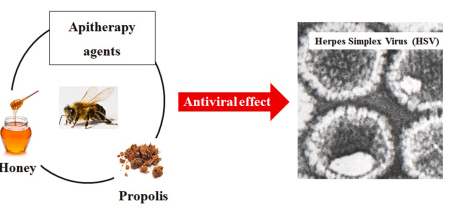
Propolis and Honey Better Than Acyclovir for Treating Cold Sores and Genital Herpes
Effect of honey and propolis, compared to acyclovir, against Herpes Simplex Virus (HSV)-induced lesions: A systematic review and meta-analysis
J Ethnopharmacol. 2021 Dec 26;287:114939
Ethnopharmacological relevance: Apitherapy is a branch of traditional medicine that uses bee products to manage numerous diseases. In this context, the antiherpetic effect of these bee products has been demonstrated in some studies with some controversial results.
Aim of the study: Thus, we conducted a systematic review and meta-analysis to compare the effectiveness of honey and propolis with acyclovir, the reference drug, in the treatment of cold sores and genital herpes.
Materials and methods: The selection of eligible studies was conducted through the search in Pubmed/MEDLINE, Scopus, Cochrane Library, LILACS, and Electronic Scientific Library.
Results: The search yielded 147 articles, of which nine were considered eligible for analysis. The analysis of these studies showed that the healing property of propolis is superior to that obtained for acyclovir (95% CI: 2.70 to 8.25; p = 0.0001). Furthermore, honey also presented a better healing effect than acyclovir against Herpes simplex virus-induced wounds (95% CI: 3.58 to -0.19; p = 0.03), inducing complete re-epithelization of herpetic lesions after 8 days, while for acyclovir, the healing time average was 9 days. It also provoked a similar reduction of pain caused by herpetic compared to acyclovir (95% CI: 2.27 to -0.42; p = 0.18).
Conclusions: Overall, these results confirm the use of honey and propolis as potent antiherpetic agents.
Tuesday, January 04, 2022
Report on the Health Benefits of Bee Products in Boosting Immunity; Treating Cancer, Diabetes, High Cholesterol, High Blood Pressure, Allergies
J Agric Food Chem. 2022 Jan 2.
Beside honey, honeybees (Apis mellifera L.) are able to produce many byproducts, including bee pollen, propolis, bee bread, royal jelly, and beeswax. Even if the medicinal properties of these byproducts have been recognized for thousands of years by the ancient civilizations, in the modern era, they have a limited use, essentially as nutritional supplements or health products. However, these natural products are excellent sources of bioactive compounds, macro- and micronutrients, that, in a synergistic way, confer multiple biological activities to these byproducts, such as, for example, antimicrobial, antioxidant, and anti-inflammatory properties.
This work aims to update the chemical and phytochemical composition of bee pollen, propolis, bee bread, royal jelly, and beeswax and to summarize the main effects exerted by these byproducts on human health, from the anticancer and immune-modulatory activities to the antidiabetic, hypolipidemic, hypotensive, and anti-allergic properties.
Labels:
Bee-Collected Pollen,
Beeswax,
Honey,
Propolis,
Royal Jelly
Wednesday, December 22, 2021
Propolis Induces Programmed Death in Human Bladder Cancer Cells
Apoptotic and Anti-angiogenic effects of propolis against human bladder cancer: Molecular docking and in vitro screening
Biomarkers. 2021 Dec 20;1-13
Introduction; Bladder cancer is still of unknown initiation and progression, it is difficult to treat the patient once bladder cancer have a distant metastasis.
Materials and Methods: In the present study, propolis extract was evaluated against bladder cancer cells (T24). Two independent pathways were investigated, apoptosis and angiogenesis, Bax, Bcl-2, P53, and caspase-3 for apoptosis, vascular endothelial growth factor receptor and protein kinase A as angiogenesis potential targets.
Objectives: Molecular docking studies will be conducted for the major known constituents of Egyptian propolis into apoptotic and angiogenic protein targets, to give better insights to the possible binding mode and interactions and investigate the ability of propolis constituents to target both apoptotic and angiogenic pathways.
Results: Propolis showed anti proliferative activity against T24 cancer cell line, IC50 value was 6.36 µg/ml. Also significant effects of propolis on Bax, Bcl-2, P53, and caspase-3 were observed. Discussion: These obtained results proved the ability of propolis to induce cell death. Also it has revealed noticeable effects on protein kinase A and vascular endothelial growth factor receptor.
Conclusion: The obtained results can encourage us to say that propolis extract can induce a programmed cell death in human bladder cancer cells, and also affect angiogenesis.
Labels:
Propolis
Saturday, November 20, 2021
Moroccan Propolis May Help Treat Diabetes
Beneficial Effect of Saharan Propolis on Glucose Metabolism in Streptozotocin-induced Diabetic Rats
Cardiovasc Hematol Disord Drug Targets. 2021 Nov 18
Aims: The aim of the study was to evaluate the antihyperglycemic activity of propolis from Saharan region of Morocco.
Background: Propolis is known from ancient times for its beneficial action on health.
Objective: The study aimed to evaluate the effect of Moroccan propolis aqueous extract from the desert region on glycemia and lipid metabolism.
Methods: The antihyperglycemic and antidyslipidemic activities of Moroccan propolis aqueous extract were evaluated in streptozotocin-induced diabetic rats. Glycemia was monitored during acute (6h) and subchronic treatments. Histopathological analysis of the liver and the serum lipid profile was also evaluated in addition to the glucose tolerance.
Results: This work demonstrated that the aqueous extract of Moroccan propolis exhibited a significant antihyperglycemic effect in diabetic rats. Histopathological data demonstrated that propolis acts positively on the liver of diabetic rats. In addition, the preliminary phytochemical screening revealed that Moroccan propolis contains several phytochemicals. Finally, Moroccan propolis had a potent antioxidant activity which may be due to the richness in polyphenols content (90.91 mg EAG/1 g of extract).
Conclusion: The present study shows that Moroccan propolis from the hot desert region possesses a potent antihyperglycemic effect.
Cardiovasc Hematol Disord Drug Targets. 2021 Nov 18
Aims: The aim of the study was to evaluate the antihyperglycemic activity of propolis from Saharan region of Morocco.
Background: Propolis is known from ancient times for its beneficial action on health.
Objective: The study aimed to evaluate the effect of Moroccan propolis aqueous extract from the desert region on glycemia and lipid metabolism.
Methods: The antihyperglycemic and antidyslipidemic activities of Moroccan propolis aqueous extract were evaluated in streptozotocin-induced diabetic rats. Glycemia was monitored during acute (6h) and subchronic treatments. Histopathological analysis of the liver and the serum lipid profile was also evaluated in addition to the glucose tolerance.
Results: This work demonstrated that the aqueous extract of Moroccan propolis exhibited a significant antihyperglycemic effect in diabetic rats. Histopathological data demonstrated that propolis acts positively on the liver of diabetic rats. In addition, the preliminary phytochemical screening revealed that Moroccan propolis contains several phytochemicals. Finally, Moroccan propolis had a potent antioxidant activity which may be due to the richness in polyphenols content (90.91 mg EAG/1 g of extract).
Conclusion: The present study shows that Moroccan propolis from the hot desert region possesses a potent antihyperglycemic effect.
Labels:
Propolis
Subscribe to:
Posts (Atom)