Monday, March 28, 2022
March 30th is World Apitherapy Day - A Series of Lectures by Leading Experts
EN HONOR A NACIMIENTO DEL DR. FILIP TERC, PADRE DE LA APITERAPIA MODERNA.
When/Cuándo: March 30, 2022 (Wednesday), 3 pm Austria time / miércoles 30 de marzo de 2022, 3 pm hora de Austria
5-10 minute presentation in English PowerPoint and any language audio / ponencias orales de 5-10 minutos en cualquier idioma con acompañamiento de PowerPoint en inglés.
The technical details of our meeting:
Detalles técnicos de la reunión:
Start: March 30 (Wednesday) at 15 h. Vienna (Austria) time (6 am in Vancouver, 2 pm in United Kingdom, 9 am in Miami and New York).
End: around 19 h.
The link to the ZOOM platform will be: https://us02web.zoom.us/j/7677675492 Password: 1234
The link to Facebook, for the live transmission will be: https://www.facebook.com/drstangaciu
ESPAÑOL:
Comienzo el 30 de marzo (miércoles) a las 3 pm hora de Austria (10 am en Argentina y Chile, 8 am en Ecuador, 3 pm en España, 7 am en México, 9 am en Miami y Nueva York).
El enlace a la plataforma ZOOM será: https://us02web.zoom.us/j/7677675492 Password: 1234
El enlace a Facebook para la trasmisión en vivo será: https://www.facebook.com/drstangaciu
Thursday, March 24, 2022
Everything to Know About Apitherapy
Apitherapy is an alternative therapy that uses products made by honeybees for medicinal purposes. These products include honey, beeswax, royal jelly, pollen, propolis, and bee venom. Apitherapists may use a combination of these products, depending on the condition they are treating...
Friday, March 18, 2022
Thursday, March 10, 2022
Video: How Bee Venom May Help Cure Cancer
Researchers from Perth's Harry Perkins Institute of Medical Research have discovered something interesting about bee venom.
WATCH THE VIDEO.
Monday, March 07, 2022
Upcoming Apitherapy Events Worldwide
March 19-20
For more details write an email to: DrStangaciu@Gmail.com
***
Beehive Air Therapy Conference, in Romanian
April 2-3
For more details write an email to: DrStangaciu@Gmail.com
***
Intensive Apitherapy Courses in Iran
April 9-13 and April 16-21
For more details write an email to: DrStangaciu@Gmail.com
***
German Apitherapy Workshops
April 24-30
***
International Conference on Propolis
May 5-7
***
First International Conference on Api-Microbiology
May 28-29
For more details write an email to: DrStangaciu@Gmail.com
***
First Api-Pediatry Conference in Arabic
June 29-30
For more details write an email to: DrStangaciu@Gmail.com and Prof. Mamdouh Abdelrhman mamdouh.abdelrhman@gmail.com
Monday, January 24, 2022
Azerbaijan Propolis May Help Treat Moderate-Severe Depression
Propolis add-on therapy alleviates depressive symptoms; A randomized placebo-controlled clinical trial
Phytother Res. 2022 Jan 24
Almost half of the treatments with common antidepressants are failed or result in a relapse of symptoms after cessation. Moreover, the antidepressants side effects rationalize the use of complementary medicine as an adjunctive therapy.
This study aimed to evaluate the efficacy and safety of propolis in complementary therapy of depressive disorder. Chromatography technics were used to detect propolis components. A double-blind, randomized, placebo-controlled trial was designed, and 54 participants were randomly assigned to receive either propolis or Placebo for 6 weeks.
Treatment was defined as a decrease in 17-item Hamilton Depression Scale (HAMD-17) and Beck depression inventory (BDI). On D42, there was a significant reduction in HAMD score in the propolis group compared with the placebo group (p < .0001). HAMD score significantly decreased in the propolis group from 20.92 ± 3.77 on D0 to 10.03 ± 5.55 on D42, and BDI score was improved from 29.25 ± 3.06 on D0 to 14.17 ± 4.86 on D42.
Our findings confirmed that complementary treatment of propolis with SSRIs could safely attenuate symptoms of moderate-severe MDD. These antidepressant effects might result from the rich phenolic acids and flavonoids content of Azerbaijan propolis.
Thursday, January 20, 2022
When will we see bee therapy in Australia?
Apitherapy is a branch of medicine alternative medicine that uses honey bee products.
Australia is yet to introduce bee therapy, but Bridgett states there are “many benefits”.
Friday, January 14, 2022
Research: Bee Pollen is a Source of Antioxidants and Antimicrobials
Screening of Plant Pollen Sources, Polyphenolic Compounds, Fatty Acids and Antioxidant/Antimicrobial Activity from Bee Pollen
Molecules 2022, 27(1), 117
In this study, the botanical origin, total flavonoid and phenolic content, antioxidant activity, phenolic profile and fatty acid composition of mixed bee pollen loads collected in Bayburt, Turkey, were determined.
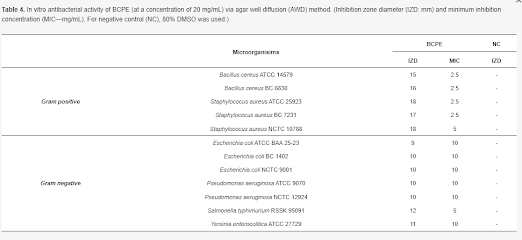
In addition to these assays, antibacterial activity of bee-collected pollen extract (BCPE) against a variety of food-borne pathogenic bacteria was determined in vitro. Pollen loads were classified into five botanical families based on their color: Asteraceae, Fabaceae, Campanulaceae, Cistaceae and Rosaceae.
Total flavonoid, total phenolic, CUPRAC and CERAC concentrations were 173.52 mg GAE/g, 79.21 mg QE/g, 85.59 mg Trolox/g and 118.13 mg Trolox/g, respectively. Twenty-three phenolic compounds were scanned in bee pollen extract by LC-MS/MS, with rutin being the most abundant. Cis-4,7,10,13,16,19 docosahexaenoic acid was the predominant fatty acid, followed by cis-11-eicosenoic acid, palmitic acid, and alfa linolenic acid.
In addition, the agar well diffusion (AWD) and micro-broth dilution methods were used to determine of the antibacterial activity of the BCPE sample. MIC values were observed to vary between 2.5–5 mg/mL for Gram-positive bacteria and 5–10 mg/mL for Gram-negative bacteria.
These findings indicate that bee pollen could be a potential source of antioxidants and antimicrobials.
Wednesday, January 05, 2022
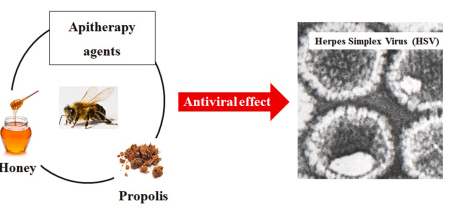
Propolis and Honey Better Than Acyclovir for Treating Cold Sores and Genital Herpes
Effect of honey and propolis, compared to acyclovir, against Herpes Simplex Virus (HSV)-induced lesions: A systematic review and meta-analysis
J Ethnopharmacol. 2021 Dec 26;287:114939
Ethnopharmacological relevance: Apitherapy is a branch of traditional medicine that uses bee products to manage numerous diseases. In this context, the antiherpetic effect of these bee products has been demonstrated in some studies with some controversial results.
Aim of the study: Thus, we conducted a systematic review and meta-analysis to compare the effectiveness of honey and propolis with acyclovir, the reference drug, in the treatment of cold sores and genital herpes.
Materials and methods: The selection of eligible studies was conducted through the search in Pubmed/MEDLINE, Scopus, Cochrane Library, LILACS, and Electronic Scientific Library.
Results: The search yielded 147 articles, of which nine were considered eligible for analysis. The analysis of these studies showed that the healing property of propolis is superior to that obtained for acyclovir (95% CI: 2.70 to 8.25; p = 0.0001). Furthermore, honey also presented a better healing effect than acyclovir against Herpes simplex virus-induced wounds (95% CI: 3.58 to -0.19; p = 0.03), inducing complete re-epithelization of herpetic lesions after 8 days, while for acyclovir, the healing time average was 9 days. It also provoked a similar reduction of pain caused by herpetic compared to acyclovir (95% CI: 2.27 to -0.42; p = 0.18).
Conclusions: Overall, these results confirm the use of honey and propolis as potent antiherpetic agents.
Tuesday, January 04, 2022
Report on the Health Benefits of Bee Products in Boosting Immunity; Treating Cancer, Diabetes, High Cholesterol, High Blood Pressure, Allergies
J Agric Food Chem. 2022 Jan 2.
Beside honey, honeybees (Apis mellifera L.) are able to produce many byproducts, including bee pollen, propolis, bee bread, royal jelly, and beeswax. Even if the medicinal properties of these byproducts have been recognized for thousands of years by the ancient civilizations, in the modern era, they have a limited use, essentially as nutritional supplements or health products. However, these natural products are excellent sources of bioactive compounds, macro- and micronutrients, that, in a synergistic way, confer multiple biological activities to these byproducts, such as, for example, antimicrobial, antioxidant, and anti-inflammatory properties.
This work aims to update the chemical and phytochemical composition of bee pollen, propolis, bee bread, royal jelly, and beeswax and to summarize the main effects exerted by these byproducts on human health, from the anticancer and immune-modulatory activities to the antidiabetic, hypolipidemic, hypotensive, and anti-allergic properties.
Wednesday, December 22, 2021
Propolis Induces Programmed Death in Human Bladder Cancer Cells
Apoptotic and Anti-angiogenic effects of propolis against human bladder cancer: Molecular docking and in vitro screening
Biomarkers. 2021 Dec 20;1-13
Introduction; Bladder cancer is still of unknown initiation and progression, it is difficult to treat the patient once bladder cancer have a distant metastasis.
Materials and Methods: In the present study, propolis extract was evaluated against bladder cancer cells (T24). Two independent pathways were investigated, apoptosis and angiogenesis, Bax, Bcl-2, P53, and caspase-3 for apoptosis, vascular endothelial growth factor receptor and protein kinase A as angiogenesis potential targets.
Objectives: Molecular docking studies will be conducted for the major known constituents of Egyptian propolis into apoptotic and angiogenic protein targets, to give better insights to the possible binding mode and interactions and investigate the ability of propolis constituents to target both apoptotic and angiogenic pathways.
Results: Propolis showed anti proliferative activity against T24 cancer cell line, IC50 value was 6.36 µg/ml. Also significant effects of propolis on Bax, Bcl-2, P53, and caspase-3 were observed. Discussion: These obtained results proved the ability of propolis to induce cell death. Also it has revealed noticeable effects on protein kinase A and vascular endothelial growth factor receptor.
Conclusion: The obtained results can encourage us to say that propolis extract can induce a programmed cell death in human bladder cancer cells, and also affect angiogenesis.
Friday, December 10, 2021
Stingless Bee Propolis May Help Treat Cancer
Cytotoxicity effect of honey, bee pollen, and propolis from seven stingless bees in some cancer cell lines
Saudi J Biol Sci. 2021 Dec;28(12):7182-7189
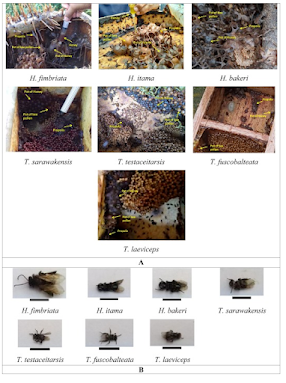
Our effort to find new material for anti cancer from natural resources leads us to focus on stingless bee products such as honey, bee pollen, and propolis. The products were from seven stingless bees named Homotrigona fimbriata, Heterotrigona itama, Heterotrigona bakeri, Tetragonula sarawakensis, Tetragonula testaceitarsis, Tetragonula fuscobalteata, Tetragonula laeviceps. The stingless bee products were evaluated for their cytotoxicity effect on MCF-7, HeLa and Caco-2 cancer cell lines.
This is the first time to be reported that the honey, ethanol extracts of bee pollen and propolis of H. fimbriata displayed more potent cytotoxicity than other stingless bee products.
By chromatography and biological activity-guided fractionation, ethanol extract of propolis from H. fimbriata was fractionated and isolated its active compound named mangiferonic acid. Mangiferonic acid showed a cytotoxicity effect with IC50 values 96.76 µM in MCF-7, > 110.04 µM in HeLa, and > 110.04 µM in Caco-2, respectively.
These results exhibited the potential of ethanol extracts from propolis of H. fimbriata to be further developed for drug and experiments to verify the function are essential.
Monday, November 29, 2021
December 5 Online: Beehive Products, Apitherapy and Immunity Against COVID-19
Sunday, December 5, 2021
The XIV-th. Congress of the Romanian Apitherapy Society
Online, free event (ZOOM)
Main theme:
Beehive products, Apitherapy and Immunity against Covid-19
09:00-09:15 (Bucharest time = Eastern European Time = UCT + 2)
Opening remarks of the members of the Board of Directors of the Romanian Apitherapy
Society and of our international participants.
Free discussions and presentations on the following main topics:
09:15-11:00
Importance of Medicinal Bee Plants for a beekeeping with medical purposes.
Best methods to combine beehive products (Apitherapy) with medicinal plants
(Phytotherapy) and essential oils (Aromatherapy) against Covid-19.
11:00-11:30 Honey break.
11:30-13:00
Medicinal oriented Beekeeping. How to get the best bee products for health.
The quality of bee products - a fundamental condition for an effective apitherapy against
Covid disease.
13:00 - 14:00 Lunch break
14:00-16:00
Pharmacological properties, effects, and actions of the bee products useful in improving
the functioning of the immune system and in the prevention and treatment of Covid disease.
Personal experience and protocols for prevention and treatment of Covid-19 (part 1).
16:00-16:30 Honey tea break
16:30-18:30 Personal experience and best protocols for prevention and treatment of
Covid-19 (part 2).
18:30-20:00 Dinner
20:00-22:00 Virtual Api-Expo.
Free presentations by beekeepers and producers of apitherapy and apiphytotherapy
preparations and products useful in the prevention and treatment of Covid-19.
Observations:
❖ Our speakers are kindly asked to give the essence of their experience in short oral or
PowerPoint based presentations of maximum 10 minutes, inviting the rest of the
participants to a harmonious and fruitful dialogue.
❖ The speakers who do not want, for various reasons, to share their personal experience,
secrets, or data with people from all over the world are kindly requested to remain
silent during the event because:
❖ All presentations will be saved in Cloud, and will be available for later view,
download and study.
❖ The questions should be written in the Chat area.
❖ We will provide consecutive translations for short comments and questions written in
French, Spanish or German.
❖ We will try to offer the event, simultaneously, also in Youtube.
❖ The maximum number of people that can be online, on our ZOOM platform, at any
given time is 100, so, after you view the topics that are of high interest to you, please
leave the conference room, to allow other people to enter.
You can re-join us later, using the same link provided above or view all
presentations, relaxed, at home or office, after the conference.
❖ The participation to the event is free of charge.
For any question, for further cooperation, etc., feel free to contact us by email to
DrStangaciu@Gmail.com and/or by Whatsapp/Signal to +40-744409126
Saturday, November 20, 2021
Moroccan Propolis May Help Treat Diabetes
Cardiovasc Hematol Disord Drug Targets. 2021 Nov 18
Aims: The aim of the study was to evaluate the antihyperglycemic activity of propolis from Saharan region of Morocco.
Background: Propolis is known from ancient times for its beneficial action on health.
Objective: The study aimed to evaluate the effect of Moroccan propolis aqueous extract from the desert region on glycemia and lipid metabolism.
Methods: The antihyperglycemic and antidyslipidemic activities of Moroccan propolis aqueous extract were evaluated in streptozotocin-induced diabetic rats. Glycemia was monitored during acute (6h) and subchronic treatments. Histopathological analysis of the liver and the serum lipid profile was also evaluated in addition to the glucose tolerance.
Results: This work demonstrated that the aqueous extract of Moroccan propolis exhibited a significant antihyperglycemic effect in diabetic rats. Histopathological data demonstrated that propolis acts positively on the liver of diabetic rats. In addition, the preliminary phytochemical screening revealed that Moroccan propolis contains several phytochemicals. Finally, Moroccan propolis had a potent antioxidant activity which may be due to the richness in polyphenols content (90.91 mg EAG/1 g of extract).
Conclusion: The present study shows that Moroccan propolis from the hot desert region possesses a potent antihyperglycemic effect.
Monday, November 15, 2021
Egypt Study: Propolis Bandage Used to Treat Burn Wounds
Deacetylated cellulose acetate nanofibrous dressing loaded with chitosan/propolis nanoparticles for the effective treatment of burn wounds
Int J Biol Macromol. 2021 Nov 10;S0141-8130(21)02432-6
Every year, about 1 out of 9 get burnt in Egypt, with a mortality rate of 37%, and they suffer from physical disfigurement and trauma. For the treatment of second-degree burns, we aim to make a smart bandage provided with control of drug release (chitosan nanoparticles) to enhance the healing process. This bandage is composed of natural materials such as cellulose acetate (CA), chitosan, propolis as the loaded drug (bee resin). Cellulose acetate nanofibers were deacetylated by NaOH after optimizing the reaction time and the concentration of NaOH solution, and the product was confirmed with FTIR analysis. Chitosan/propolis nanoparticles were prepared by ion gelation method with size ranging from 100 to 200 nm and a polydispersity index of 0.3. Chitosan/propolis nanoparticles were preloaded in the CA solution to ensure homogeneity. Loaded deacetylated cellulose nanofibers have shown the greatest hydrophobicity measured by contact angle. Cytotoxicity of propolis and chitosan/propolis nanoparticles were tested and the experimental IC50 value was about 137.5 and 116.0 μg/mL, respectively, with p-value ≤0.001. In addition, chitosan/propolis nanoparticles loaded into cellulose nanofibers showed a cell viability of 89.46%. In-vivo experiments showed that after 21 days of treatment with the loaded nanofibers repairing of epithelial cells, hair follicles and sebaceous glands in the skin of the burn wound were found in a mice model.